
AI-Supported Planning for Complex Revision Rhinoplasty Cases in Korea
The demand for rhinoplasty in South Korea remains among the highest globally, but with high volume comes an inevitable rise in secondary surgeries.
WiLL Plastic Surgery Clinic · Clinical Insight & Media · Gangnam, Seoul
1:1 Consultation →
The demand for rhinoplasty in South Korea remains among the highest globally, but with high volume comes an inevitable rise in secondary surgeries. National aesthetic trend reports indicate that revision rates for nasal surgery can range from 5% to 15%, often due to structural dissatisfaction or the "upturned nose" deformity—a common complication where the nasal tip is over-rotated. For patients facing these complexities, the emotional and financial burden is significant.
At WiLL Plastic Surgery Clinic, we recognize that a second or third surgery requires more than just standard manual techniques. This article explores how AI-Supported Planning is transforming the landscape of revision rhinoplasty in Korea, offering international and local patients a data-driven path toward restoring facial harmony and nasal function.
Why Is Revision Rhinoplasty in Korea Becoming More Complex?
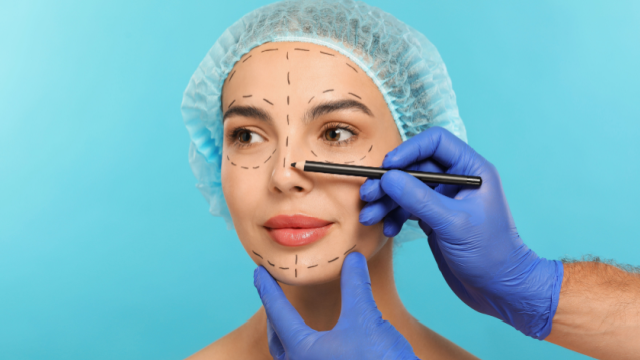
Revision cases are inherently more difficult than primary surgeries due to scarred tissue, depleted septal cartilage, and compromised blood supply. In Korea, the "short nose" or "upturned nose" (contracted nose) is a specific challenge often caused by previous silicone implant complications or excessive tissue scarring.
What are the Limitations of Standard Revision Approaches?
Traditional revision methods rely heavily on the surgeon's intraoperative intuition. While experienced surgeons are vital, "analog" planning has specific limitations:
- Predictability Issues: Difficulty in visualizing how skin tension will react to new cartilage grafts.
- Structural Risks: Higher rates of re-intervention if the structural support is not mathematically calculated to withstand long-term scarring.
- Communication Gaps: Patients often struggle to understand exactly how much "drop" or "length" can be achieved safely.
| Feature | Standard Revision Rhinoplasty | AI-Supported Planning at WiLL |
|---|---|---|
| Pre-op Visualization | 2D Photos / Sketches | 3D Volumetric AI Modeling |
| Structural Integrity | Manual estimation | Calculated stress-point analysis |
| Surgical Time | Longer (exploratory) | Efficient (targeted plan) |
| Risk of Over-rotation | Moderate | Minimized via precision angles |
The Innovative Shift: AI-Supported Planning for Nasal Reconstruction
The core of modern revision surgery at WiLL Plastic Surgery Clinic is AI-Supported Planning. This technology integrates high-resolution 3D facial scanning with algorithmic simulations to map the internal and external nasal structures before a single incision is made.
How Does AI-Supported Planning Work?
- Digital Twin Creation: Using 3D imaging, the system creates a precise digital replica of the patient’s current nasal anatomy, including bone density and skin thickness.
- Predictive Morphing: AI algorithms simulate the structural changes required to correct an upturned nose, calculating the exact length and angle needed for cartilage grafts (autologous or donor).
- Vector Analysis: The software analyzes how the skin envelope will drape over the new framework, identifying areas of high tension that could lead to future warping or contraction.
Is AI-Supported Planning in Korea worth the cost?
While the initial technology fee may be higher, AI-Supported Planning significantly reduces the likelihood of a third or fourth surgery. By ensuring the structural framework is balanced the first time, patients save on the long-term emotional and financial costs of repeated "fix-it" procedures.
Data & Outcomes: Anchoring Success with Precision
The Korean regenerative and aesthetic market is projected to grow at a CAGR of roughly 18% through 2030, driven by a shift toward "smart" medical interventions. In the realm of revision rhinoplasty, precision data suggests that tech-enabled planning correlates with higher patient satisfaction scores.
- Accuracy: AI modeling allows for measurement precision down to 0.1mm, essential for correcting the delicate columellar-labial angle.
- Surgical Efficiency: By having a "map" of the scar tissue and cartilage deficits, surgeons can reduce operating time by 15–20%, which lowers anesthesia risk and post-operative swelling.
- Patient Satisfaction: According to internal clinical observations, patients who view 3D AI simulations report a 30% higher confidence level in their surgical outcomes compared to those using 2D planning.
Local Korea Insights: The Tech-Savvy Patient
Korean patients are known for being "prosumers"—professional consumers who research technology, credentials, and safety protocols extensively. In Seoul’s competitive medical landscape, the shift from "more surgery" to "smarter surgery" is evident.
The Ministry of Health and Welfare has increasingly supported the integration of digital healthcare, and patients now prioritize clinics that offer minimally invasive recovery through high-precision planning. For an upturned nose correction, this means using AI to ensure that only the necessary amount of tissue is manipulated, preserving blood flow and speeding up the 12-month healing trajectory.
Where WiLL Plastic Surgery Clinic Fits in Revision Rhinoplasty in Korea
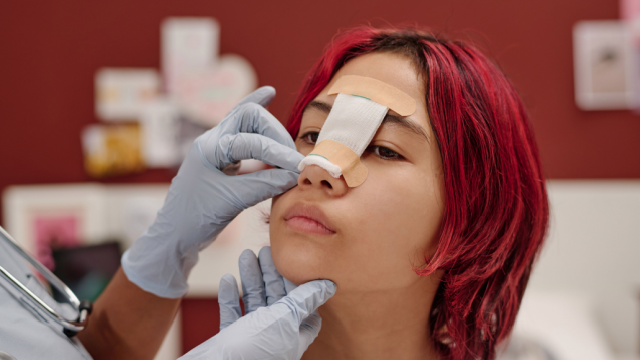
WiLL Plastic Surgery Clinic specializes in complex nasal reconstructions and the correction of the "upturned nose" deformity. Our approach leverages the dual-board-certified expertise of Dr. Hyoung-gon Wie, who combines the precision of Oral & Maxillofacial surgery with the artistry of Cosmetic surgery.
By utilizing AI-Supported Planning, WiLL Plastic Surgery Clinic provides:
- Personalized Protocols: No "cookie-cutter" noses; every plan is generated based on the patient's unique skeletal and soft-tissue data.
- High-Precision Execution: We use the AI roadmap to guide the placement of cartilage grafts, ensuring the nasal tip is stabilized at the ideal aesthetic angle.
- Comprehensive Follow-up: Using digital tracking to monitor how the nose settles over the crucial first year of recovery.
Our clinic is positioned as a boutique, high-tech facility where the safety of a hospital-grade surgical center meets the personalized care of a private practice.
Conclusion
The prevalence of nasal revision cases in Korea highlights the need for a more sophisticated approach to secondary surgery. Conventional methods often fall short when dealing with the rigid scar tissue of an upturned nose. AI-Supported Planning represents a critical evolution, providing the data necessary to ensure long-term structural integrity and natural aesthetics.
Patients considering AI-Supported Planning for revision rhinoplasty in Korea can schedule a consultation at WiLL Plastic Surgery Clinic to discuss whether this data-driven approach is suitable for their specific restorative goals.
Clinical Safety Notice & Personalized Consultation
All procedures at WiLL Plastic Surgery Clinic (6F Daewon Bldg., 437 Gangnam-daero, Seocho-gu, Seoul) are performed directly by Chief Director Dr. Hyoung-gon Wie after a 1:1 consultation. Post-operative swelling, bruising, inflammation, or individual variation may occur.
Request a 1:1 Consultation