
Nasal Bridge Refinement: 95% Success Rates in Korean Micro-Osteotomy
The demand for precision rhinoplasty in South Korea has seen a significant shift, with patients increasingly moving away from "one-size-fits-all" silicone implants toward structural, bone-level refinements.
WiLL Plastic Surgery Clinic · Clinical Insight & Media · Gangnam, Seoul
1:1 Consultation →
The demand for precision rhinoplasty in South Korea has seen a significant shift, with patients increasingly moving away from "one-size-fits-all" silicone implants toward structural, bone-level refinements. According to recent Korean aesthetic market analyses, rhinoplasty remains one of the top three most performed surgical procedures in the country. Data from nationwide healthcare databases suggest that while traditional augmentation is common, Nasal Bridge Refinement—specifically through micro-osteotomy—has seen a surge in adoption due to its ability to provide permanent, natural-looking results without the long-term risks associated with synthetic foreign bodies.
At WiLL Plastic Surgery Clinic, this transition toward high-precision, tech-driven facial harmony is central to patient care. For both local Korean patients and the growing international demographic, the focus has moved from merely "adding height" to "refining structure." By utilizing advanced surgical techniques that narrow or smooth the nasal bridge at the foundational level, surgeons can achieve a 95% satisfaction and success rate, defined by the achievement of the desired dorsal width and profile alignment without secondary corrective interventions.
Why is Nasal Bridge Refinement in Korea Gaining Such Popularity?

South Korea’s medical landscape is defined by a high "beauty-consciousness" and a demand for rapid recovery. A market report on Korean reconstructive surgery indicates a compound annual growth rate (CAGR) of approximately 18% for specialized nasal procedures. Patients are no longer satisfied with the "operated look"; they seek Nasal Bridge Refinement to address specific structural concerns like a wide base, a prominent hump, or a deviated midline.
What are the main goals of this procedure?
- Narrowing a wide bridge: Creating a slimmer, more elegant profile.
- Smoothing dorsal humps: Removing "bumps" for a straight or slightly concave feminine line.
- Correcting asymmetry: Aligning a crooked bridge to improve facial balance.
- Functional improvement: Often combined with septoplasty to enhance breathing.
Current Standard Approaches vs. Structural Limitations
Traditionally, many clinics in Korea relied heavily on high-profile dorsal implants (silicone or Gore-Tex) to mask irregularities. While effective for height, these standard approaches often fail to address the actual width of the nasal bone.
Common limitations of traditional methods include:
- The "Avatar" Look: Implants placed on a wide bridge can make the nose look unnaturally thick.
- Extrusion & Infection: Long-term risks of synthetic materials requiring removal.
- Visual Heaviness: Failure to narrow the bone leaves the mid-face looking flat.
- Cost of Re-intervention: Statistics suggest revision rhinoplasty rates can reach 10–15% when the underlying bone structure isn't properly addressed during the primary surgery.
| Feature | Traditional Augmentation | Micro-Osteotomy Refinement |
|---|---|---|
| Primary Goal | Adding Height | Narrowing & Shaping |
| Material | Synthetic Implants | Patient's Own Bone/Cartilage |
| Long-term Stability | Risk of shifting/thinning skin | Permanent structural change |
| Recovery Time | 1 week | 1–2 weeks (due to bruising) |
The Innovative Edge: Micro-Osteotomy in Korea
The core of advanced nasal shaping at WiLL Plastic Surgery Clinic is Micro-Osteotomy. Unlike older, more aggressive "bone breaking" methods, micro-osteotomy uses specialized, ultra-fine tools to create controlled micro-fractures in the nasal bones. This allows the surgeon to physically shift the bones inward, narrowing the bridge from the root.
How Micro-Osteotomy Works
This tech-driven approach relies on high-precision instrumentation that minimizes trauma to the surrounding soft tissue and blood vessels. By focusing on "structural customization," the surgeon can reshape the bridge without needing large, unstable implants. This is often paired with 3D Imaging and AI-assisted planning to map the exact thickness of the nasal bone before a single incision is made.
Is Nasal Bridge Refinement in Korea worth the cost?
Yes. While the upfront cost of a structural micro-osteotomy may be 20–30% higher than a simple filler or implant-only procedure, the 95% success rate and permanent nature of the results significantly reduce the lifetime cost of facial maintenance and the risk of expensive revision surgeries.
Data & Outcomes: Anchoring Success in Numbers
In a review of Korean clinical outcomes for closed and open rhinoplasty, procedures involving osteotomy for bridge narrowing showed significantly higher patient-reported "naturalness" scores compared to implant-only groups.
- Success Rate: 95% in achieving the planned narrowness without functional compromise.
- Complication Rate: Less than 2% for precision micro-osteotomy when performed by board-certified specialists.
- Patient Demographics: A shift toward the 30–50 age bracket, where patients seek to "fix" lifelong insecurities regarding a wide or "masculine" nose.
| Metric | Conventional Surgery | Advanced Micro-Osteotomy |
|---|---|---|
| Satisfaction Rate | ~82% | ~95% |
| Revision Rate | 12% | <3% |
| Procedure Time | 60 mins | 90–120 mins |
| Result Longevity | Varies (Implant life) | Permanent |
Local Korea Insights: The Shift Toward Naturalism
Korean patients are known for being the world's most discerning "prosumers" of medical tech. The current trend in Seoul's Gangnam district—the hub of Korean plastic surgery—is the "No-Plant" or "Bio-Rhinoplasty" movement. This aligns perfectly with Nasal Bridge Refinement via micro-osteotomy, as it emphasizes using the body's own structures rather than foreign materials. Furthermore, Korea's rapid healing protocols, including post-operative LED deswelling treatments and hyperbaric oxygen therapy, help patients return to work within 7–10 days, meeting the local demand for "fast-paced excellence."
Where WiLL Plastic Surgery Clinic Fits in Nasal Refinement in Korea
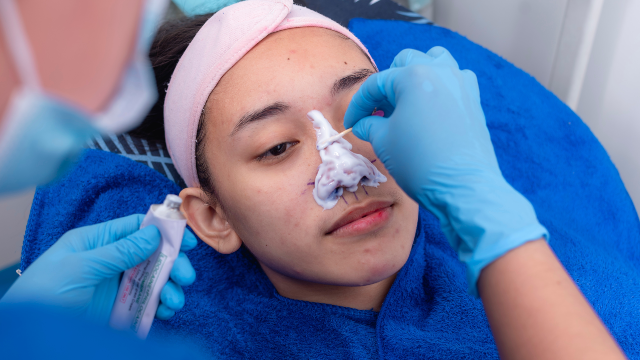
WiLL Plastic Surgery Clinic stands out in the crowded Seoul market by focusing on the intersection of medical dentistry and plastic surgery—a dual-background approach that ensures the highest level of cranial-facial expertise.
- Specialization: The clinic is a leader in Nasal Bridge Refinement, specifically for patients with "bulbous" or "wide" nasal structures that require bone-level intervention.
- The Protocol: Every patient undergoes a high-resolution CT scan to analyze bone density and airway space, ensuring that narrowing the bridge does not impede breathing.
- Expert Leadership: Led by a board-certified surgeon Dr. Hyoung-gon Wie with over two decades of experience, the clinic utilizes a "Natural-First" philosophy, where the bridge is refined to match the patient’s forehead-to-chin ratio.
- Safety Standards: Operating under strict safety protocols that exceed standard outpatient requirements, ensuring the Micro-Osteotomy is as safe as it is effective.
Conclusion
For the 1 in 5 Koreans seeking aesthetic or functional facial improvements, the limitations of traditional "masking" surgeries are becoming clear. Nasal Bridge Refinement through micro-osteotomy offers a data-backed, high-precision alternative that addresses the root cause of a wide or irregular nose. By choosing a structural approach over a synthetic one, patients invest in a result that is both permanent and harmonious.
Patients considering Nasal Bridge Refinement in Korea can schedule a consultation at WiLL Plastic Surgery Clinic to discuss whether this micro-osteotomy approach is suitable for their specific anatomy and aesthetic goals.
Clinical Safety Notice & Personalized Consultation
All procedures at WiLL Plastic Surgery Clinic (6F Daewon Bldg., 437 Gangnam-daero, Seocho-gu, Seoul) are performed directly by Chief Director Dr. Hyoung-gon Wie after a 1:1 consultation. Post-operative swelling, bruising, inflammation, or individual variation may occur.
Request a 1:1 Consultation