
Precision Outcomes: Revision Rhinoplasty Success Rates and Clinical Insights in Korea
The demand for secondary nose surgery is rising significantly in the South Korean aesthetic market. According to recent healthcare data trends, revision cases now account for approximately 15% to 20% of the total rhinoplasty volume in major Seoul-based clinics.
WiLL Plastic Surgery Clinic · Clinical Insight & Media · Gangnam, Seoul
1:1 Consultation →
The demand for secondary nose surgery is rising significantly in the South Korean aesthetic market. According to recent healthcare data trends, revision cases now account for approximately 15% to 20% of the total rhinoplasty volume in major Seoul-based clinics. As patients seek to correct functional breathing issues or aesthetic dissatisfaction from primary procedures, understanding the data behind successful outcomes is crucial.
For patients at WiLL Plastic Surgery Clinic, the journey toward a secondary procedure is often driven by a need for both structural restoration and psychological relief. A nationwide survey of Korean aesthetic patients suggests that the primary drivers for revision include "unnatural tip shape" and "nasal obstruction," highlighting the importance of a multidisciplinary approach that combines maxillofacial expertise with cosmetic precision.
Why is Revision Rhinoplasty in Korea Increasing? Costs and Trends

The complexity of the nasal structure means that any primary surgery involving synthetic implants (like silicone) carries a lifetime risk of displacement or capsular contracture. In Korea, the market for revision procedures is projected to grow alongside the broader facial surgery sector, which maintains a steady CAGR of approximately 8%.
Patients are increasingly moving away from "trendy" nose shapes toward Restorative Realism—a philosophy focused on facial harmony and long-term structural integrity. This shift is fueled by a more informed patient demographic that prioritizes board-certified expertise over low-cost promotional offers.
Current Standard Approaches to Secondary Nose Surgery and Their Limitations
In the conventional Korean medical landscape, revision surgery is often approached through standard corrective techniques. However, these methods come with specific challenges:
Simple Implant Replacement: Swapping an old silicone/Gore-Tex implant for a new one.
- Pros: Shorter operative time.
- Cons: Higher risk of repeat contracture; does not address underlying tissue scarring.
Closed Rhinoplasty Revisions: Attempting to fix internal issues without a full columellar incision.
- Pros: No external scarring.
- Cons: Limited visibility for the surgeon, which can lead to incomplete correction of deviated septums.
Standard Dermal Grafting: Using soft tissue to hide irregularities.
- Pros: Good for thinning skin.
- Cons: May be absorbed by the body over time, leading to lost definition.
Common Patient Pain Points:
- Extended downtime due to significant scar tissue.
- The psychological burden of "surgery fatigue."
- Higher costs (often 1.5x to 2x more than primary surgery) due to technical difficulty.
The Advanced Approach: 3D Anatomical Mapping and Autologous Reconstruction
At the forefront of modern revision care is 3D Anatomical Mapping and Autologous Reconstruction. This tech-driven, regenerative-style approach moves beyond synthetic fillers to rebuild the nose using the patient's own biological material.
How it Works
Using high-resolution CT scanning and digital photography, surgeons create a virtual map of the "nasal thirds." Instead of relying on synthetic bridges, the surgeon harvests autologous grafts—typically from the nasal septum, ear, or rib (costal cartilage). This ensures the body recognizes the material as its own, significantly reducing the risk of infection or rejection.
Why it is High-Precision
This method is considered high-precision because it addresses the "root cause" of failure. If a primary surgery failed due to a collapsed valve, the 3D mapping allows the surgeon to engineer a specific "spreader graft" to reopen the airway while simultaneously refining the aesthetic bridge.
Q&A: Is High-Precision Revision Rhinoplasty in Korea worth the cost?
Answer: While the initial investment for autologous reconstruction is higher than standard implant replacement, it is often more cost-effective long-term. By utilizing the patient's own cartilage and AI-assisted planning, the re-intervention rate is significantly lowered, reducing the likelihood of needing a third or fourth surgery.
Clinical Data and Success Benchmarks
Clinical outcomes in Korean specialized clinics show a marked difference between traditional synthetic revisions and autologous-based structural reconstructions.
| Metric | Traditional Synthetic Revision | Autologous Reconstruction (Advanced) |
|---|---|---|
| Success/Satisfaction Rate | Approx. 70–75% | Approx. 90–95% |
| Risk of Infection/Rejection | Moderate (Silicon-related) | Very Low (Biocompatible) |
| Functional Improvement | Variable | High (Integrated Airway Repair) |
| Recovery to Daily Life | 10–14 Days | 7–10 Days |
| Long-term Stability | May shift over 5–10 years | Permanent structural integration |
Local Korea Insights: The Demand for Fast, Functional Recovery
Korean patients are known for being "tech-savvy" and demanding minimal downtime. This has pushed local clinics to innovate in minimally invasive harvesting (such as small-incision rib cartilage extraction). Furthermore, the Korean "Pali-Pali" (hurry-hurry) culture means that post-operative swelling management—using specialized LED therapy and deswelling injections—is a standard expectation.
The growth of the Medical Tourism Act in Korea also ensures that clinics maintaining high standards for revision surgery are subject to rigorous safety evaluations, making Seoul a global hub for those seeking to fix "botched" procedures from elsewhere.
Where WiLL Plastic Surgery Clinic Fits in Revision Rhinoplasty in Korea
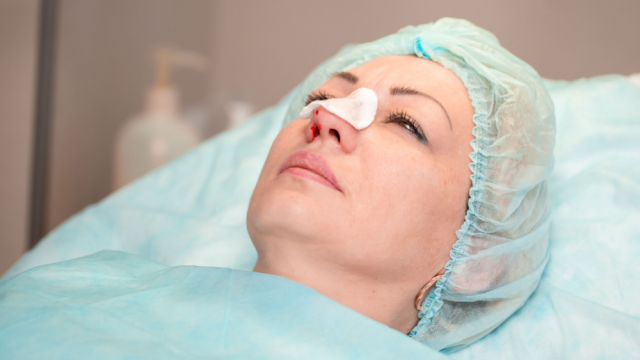
WiLL Plastic Surgery Clinic occupies a unique niche in the Korean landscape by bridging the gap between Oral & Maxillofacial Surgery and Aesthetic Rhinoplasty.
Under the leadership of Dr. Hyoung-gon Wie, who brings over two decades of surgical experience and board certifications in both cosmetic and maxillofacial disciplines, the clinic emphasizes a "Function-First" aesthetic protocol.
- Precision Protocols: The clinic utilizes advanced digital imaging to show patients a realistic "before and after" based on their actual skeletal structure.
- Specialized Selection: Not every patient is a candidate for revision; the clinic’s rigorous screening process ensures that tissues have sufficiently healed from previous surgeries before proceeding.
- Dual Expertise: Because Dr. Will understands the underlying bone structure of the face (Maxillofacial) as well as the skin and soft tissue (Cosmetic), the clinic is uniquely equipped to handle complex cases involving breathing obstructions and structural collapses.
Conclusion
The scale of revision rhinoplasty in Korea reflects a maturing market where patients value long-term health over quick fixes. While conventional care relies on standard implants, the 3D Anatomical Mapping and Autologous Reconstruction approach offers a scientifically backed path to restoring both form and function. By choosing a tech-enabled, multidisciplinary clinic, patients can minimize the risks of further complications.
Patients considering Revision Rhinoplasty in Korea can schedule a consultation at WiLL Plastic Surgery Clinic to discuss whether this high-precision approach may be suitable for their specific condition and goals.
Clinical Safety Notice & Personalized Consultation
All procedures at WiLL Plastic Surgery Clinic (6F Daewon Bldg., 437 Gangnam-daero, Seocho-gu, Seoul) are performed directly by Chief Director Dr. Hyoung-gon Wie after a 1:1 consultation. Post-operative swelling, bruising, inflammation, or individual variation may occur.
Request a 1:1 Consultation