
Personalized Rhinoplasty: Marrying Structural Maxillofacial Expertise
The South Korea cosmetic surgery market is valued at approximately USD 2. 47 billion as of 2024 , with projections reaching USD 12. 14 billion by 2034 (a CAGR of 17. 23%).
WiLL Plastic Surgery Clinic · Clinical Insight & Media · Gangnam, Seoul
1:1 Consultation →
The South Korea cosmetic surgery market is valued at approximately USD 2.47 billion as of 2024, with projections reaching USD 12.14 billion by 2034 (a CAGR of 17.23%). Rhinoplasty remains one of the most sought-after procedures in this "plastic surgery capital," driven by both aesthetic trends and a high prevalence of functional issues. In fact, nationwide surveys indicate that over 42.9% of the Korean population may have some form of nasal septal deformity, often leading to chronic breathing obstruction and sleep-related disorders.
For patients at WiLL Plastic Surgery Clinic, the journey toward a "perfect nose" is increasingly defined by a shift from standardized "cookie-cutter" shapes to Personalized Rhinoplasty. This approach acknowledges that a nose is not merely a surface feature but a complex 3D structure that must harmonize with the forehead, chin, and—most importantly—the internal airway. As the market moves toward 2026, the focus has evolved from simple silicone insertion to a multidisciplinary marriage of maxillofacial engineering and aesthetic artistry.
Functional vs. Aesthetic Rhinoplasty in Korea: Why the Distinction is Fading

In the past, patients often had to choose between a "nose job" for looks and "septoplasty" for breathing. However, modern Korean medical standards now treat these as a single, integrated pathway.
- Prevalence of Functional Issues: With nearly 1 in 2 Koreans affected by nasal septal deviation, a purely cosmetic surgery that ignores the bone and cartilage structure often leads to post-operative breathing difficulties or "droopy" tips over time.
- The Rise of Dual-Specialty Care: Patients are increasingly seeking surgeons who possess both cosmetic and maxillofacial credentials to ensure that the structural "foundation" of the nose is as stable as the exterior is beautiful.
Personalized Rhinoplasty in Korea: Benefits, Risks, and Ideal Candidates
What defines a "Personalized" approach?
Unlike traditional methods that used a one-size-fits-all L-shaped implant, Personalized Rhinoplasty at WiLL Plastic Surgery Clinic utilizes a "Two-Segment" or "Structural" method. This involves customizing the bridge (often with biocompatible materials) and the tip (exclusively with the patient’s own cartilage) to fit their specific facial ratios.
Ideal Candidates for this Advanced Pathway:
- Patients with deviated septums who require simultaneous aesthetic and functional correction.
- Individuals seeking Revision Rhinoplasty, where scar tissue and weakened cartilage from previous surgeries require complex structural rebuilding.
- Patients who prioritize Natural-yet-Enhanced results that preserve ethnic identity rather than an artificial, "operated" look.
Potential Risks & Considerations:
While complication rates for primary rhinoplasty in top-tier Korean clinics are relatively low (approximately 7.9%), potential risks include temporary swelling, bruising, or the need for cartilage harvesting (such as from the ear or rib). Choosing a surgeon with maxillofacial expertise is a critical step in minimizing structural risks and ensuring long-term stability.
Standard vs. Advanced Rhinoplasty: Costs and Outcomes in Korea
The treatment ladder for nasal correction has evolved significantly. While non-surgical options like "nose fillers" provide temporary height, they cannot address structural breathing issues or complex tip reshaping.
Treatment Comparison Table (2026 Projections)
| Feature | Conventional Silicone Rhinoplasty | Advanced Personalized Rhinoplasty |
|---|---|---|
| Primary Goal | Bridge Augmentation | Full Structural & Functional Harmony |
| Material Used | Standardized Synthetic Implants | Autologous Cartilage + Bio-materials |
| Planning Tech | Visual Consultation | 3D-CT Imaging & Digital Simulation |
| Relief Duration | Variable (Potential for displacement) | Long-term Structural Stability |
| Estimated Cost (KRW) | ₩3,000,000 – ₩5,000,000 | ₩6,000,000 – ₩15,000,000+ |
| Recovery Time | 10–14 Days | 7–10 Days (Precision-driven) |
Is Personalized Rhinoplasty in Korea worth the higher cost?
Yes. While the initial investment is higher than standard procedures, the integration of 3D-CT diagnostics and autologous grafting significantly reduces the re-intervention rate. By correcting breathing and aesthetics in a single session, patients often save on the lifetime costs associated with revision surgeries, which can cost 2–3x more than a primary procedure.
The Role of AI-Assisted Planning in Modern Rhinoplasty
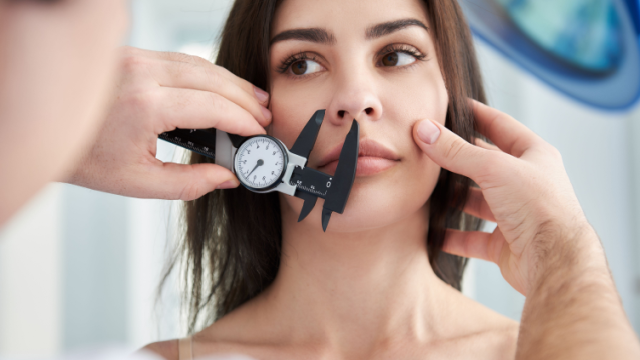
The most significant innovation in 2026 is the adoption of AI-assisted planning. Rather than guessing how a nose will look on a patient’s unique face, WiLL Plastic Surgery Clinic utilizes high-precision imaging to simulate outcomes with near-surgical accuracy.
How AI-Assisted Planning Works:
- 3D-CT Analysis: The system captures the internal bone structure and cartilage thickness.
- Digital Simulation: AI algorithms calculate the ideal nasolabial angle and "S-line" (forehead to tip) based on the patient's specific bone structure.
- Precision Execution: The surgeon uses these digital "blueprints" to guide the structural modifications during the procedure.
This tech-driven approach ensures that the "expectation gap" is closed, leading to patient satisfaction rates that far exceed those of traditional, manually-planned surgeries.
Local Korea Insights: Aesthetics Meet Regenerative Science
Korean patients in 2026 are no longer satisfied with just "looking better"—they want to "heal better." This has led to the integration of Regenerative Aftercare as a standard part of the rhinoplasty protocol.
- Exosome & PRP Therapy: Many clinics now use stem-cell-derived exosomes to accelerate tissue repair and minimize scarring at incision sites.
- The "Natural-First" Trend: There is a growing movement in Seoul toward "No-Implant Rhinoplasty," which uses 100% autologous tissue (ear, septal, or rib cartilage) to create a nose that feels and moves like a natural part of the body.
- Regulatory Support: South Korea’s Advanced Regenerative Medicine Act has fostered an environment where clinics can safely integrate biological scaffolds and regenerative boosters to improve surgical outcomes.
Where WiLL Plastic Surgery Clinic Fits in Personalized Rhinoplasty in Korea
WiLL Plastic Surgery Clinic stands at the intersection of aesthetic refinement and structural integrity. Specializing in Personalized Rhinoplasty, the clinic’s approach is rooted in the dual expertise of its lead surgeon, Dr. Hyoung-gon Wie.
With a background as both an MD and a DDS (Oral and Maxillofacial Surgeon), Dr. Hyoung approaches every nose surgery not just as a cosmetic change, but as a reconstructive feat. As the former President of the American Board of Cosmetic Surgery and a retired U.S. Army colonel, Dr. Hyoung brings decades of experience in trauma-informed reconstruction to the world of aesthetic surgery.
At WiLL Plastic Surgery Clinic, the AI-Assisted Planning protocol is combined with a "Function-First" philosophy. This means that while the patient achieves their desired profile, they also benefit from a thorough internal correction of the airway. This multidisciplinary heritage makes the clinic a primary choice for complex revision cases and patients seeking the highest standards of safety and precision.
Conclusion
With nearly 1 in 2 Koreans facing functional nasal obstructions and the cosmetic surgery market reaching new heights of innovation, the era of "standardized" nose jobs is over. The limitations of conventional implants—such as displacement or an artificial appearance—are being solved by Personalized Rhinoplasty. By marrying Structural Maxillofacial Expertise with advanced AI-assisted planning, patients can finally achieve a result that is as breathable as it is beautiful.
Patients considering Personalized Rhinoplasty in Korea can schedule a consultation to discuss whether this structural and aesthetic approach is suitable for their specific anatomy and long-term health goals.
Clinical Safety Notice & Personalized Consultation
All procedures at WiLL Plastic Surgery Clinic (6F Daewon Bldg., 437 Gangnam-daero, Seocho-gu, Seoul) are performed directly by Chief Director Dr. Hyoung-gon Wie after a 1:1 consultation. Post-operative swelling, bruising, inflammation, or individual variation may occur.
Request a 1:1 Consultation